

Overview
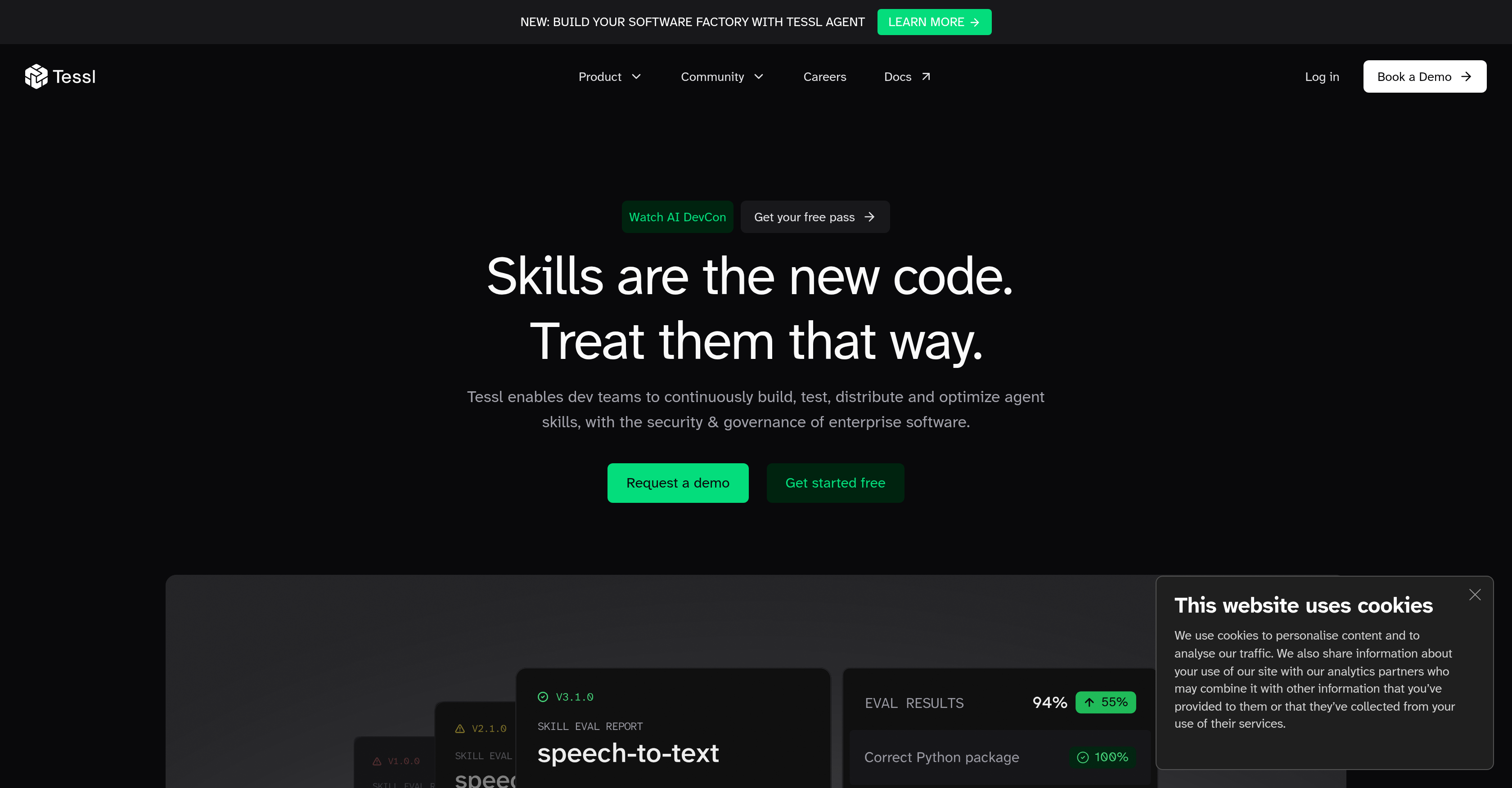
- Ship agent skills without security incidents using pre-install security scans, policy gating, and audit logs on every skill before it runs
- Grow team capabilities without skill sprawl by managing every skill through a shared registry, version management, and contribution governance
- Eliminate duplicated skill-building work through a shared registry and contribution governance that turn good work into reusable, governed assets
- Know exactly which skills are installed versus actually used with visibility into published skills, project coverage, and real activation data on developer machines
- Find and close performance gaps fast through team-wide skill evaluations and insights that surface improvement areas from real activation data
- Pass enterprise security reviews with automated enforcement of security standards, full skill inventory, and audit logs across every team
- Scale agent skill adoption confidently with a control plane that monitors running activity and validates and scores skills before installation
Pros & Cons
Pros
- Security scans
- Policy setting
- Audit logs
- Shared registry
- Version management
- Contribution governance
- Skill performance visibility
- Evaluations and insights
- Skill validation pre-installation
- Full skill inventory
- Automated security enforcement
- Scalability without risk
- Risk mitigation
- Provides controlled environment
- Skill optimization emphasis
- Reuse & effective management
- System regulation
- Effective governance
- Work duplication prevention
- Skill recycling
- Productivity enhancement
- Team-wide improvements
- Real activation data
- Control plane provision
- Mitigates skill sprawl
- Streamlines agent skills management
- Agent Skills Optimization
- Automated Security Standards Enforcement
- Inventory Management
- Performance Evaluation
- Development Teams Assistance
- Skills Management
- Security & Governance
- Standardization & Reuse
- Continuous Optimization
- Version Management
- Improving Productivity
- Skills Scoring
- Ensures Security
- Governed, measurable system
- Stop rebuilding existing skills
- 3, 000+ searchable skills
- Scale without losing control
- Visibility of skill performance
- Three layers of visibility
- Surface exact failure causes
Cons
- No real-time collaboration feature
- Limited integration with agents
- Doesn't mention multi-language support
- No offline mode
- No mobile application
- Complexity of usability
- Single shared registry
- No clear data visualization tools
- No transparent pricing structure
- Limited automated testing capabilities
Reviews
Rate this tool
Loading reviews...
❓ Frequently Asked Questions
Tessl is an AI-native software building tool that aids development teams in the creation, testing, distribution, and optimization of agent skills. It incorporates strict governance and security protocols, creating a management layer that converts broad and potentially risky skill sets into a regulated, measurable system. It's designed to reduce risks and enhance efficiency.
Tessl provides comprehensive assistance to development teams in optimizing agent skills through various features. It offers a control panel that monitors activity and ensures security, validates and scores skills before installation, and maintains a complete inventory of skills and audit logs. Tessl also provides insights and evaluations into the performance of team-wide skills, helping to identify gaps and areas for improvement.
Tessl primarily focuses on three areas: Security & Governance, Standardization & Reuse, and Continuous Optimization. Under Security & Governance, Tessl offers features like security scans, policy setting, and audit logs. It emphasizes standardization and reuse through shared registries, version management, and contribution governance. Lastly, in terms of Continuous Optimization, Tessl enhances effectiveness by evaluating the performance of team-wide skills and offering insights for improvements.
Tessl offers an array of security features such as performing security scans, setting up policies, and maintaining audit logs for every skill prior to its execution to prevent possible issues. It also features a control plane that keeps track of running activities and ensures security. Plus, Tessl validates and scores skills before installation, keeps full skill inventory and audit logs, and automates the enforcement of security standards across teams.
Tessl promotes the standardization and reuse of agent skills by providing a shared registry, implementing version management, and setting up contribution governance. These features aid in avoiding work duplication and encouraging skill recycling, thereby reducing redundancies and boosting productivity.
Tessl provides multiple features for continuous optimization of agent skills. It offers visibility into the performance of skills across a team, and supports improvements through evaluations and insights. By analyzing data on published skills, coverage, and real activation data, Tessl assists in uncovering gaps and areas for enhancement.
Tessl's control plane plays a significant role in enhancing security. It monitors ongoing activities and ensures that only secure operations are running. This control plane validates and scores skills before they're installed, keeps a complete inventory of skills and audit logs, and automates the application of security standards across all teams.
Tessl prevents skill sprawl by offering a system that manages agent skills, avoiding the chaos of duplicate, outdated, and indeterminate skills. Through a shared, governed asset, Tessl ensures a workspace where skills are searchable and controllable, promoting growth in capabilities while keeping track of and governing skill sets.
Tessl assists in version management by using a system that treats agent skills similarly to software. This system enables skills to be versioned, evaluated, and security-checked before reaching developers, preventing the use of outdated or irrelevant versions of skills.
Tessl can assist in improving productivity through a systematic approach to standardization and reuse. By maintaining a shared registry and implementing version management and contribution governance, Tessl prevents duplicative work and facilitates skill recycling. This results in minimized redundancies and heightened productivity.
Tessl offers comprehensive evaluation and insights into team-wide skill performance. It helps identify gaps and areas for improvement by assessing published skills, coverage, and real activation data. Through these evaluations, Tessl enables teams to refine their efficiency and effectiveness.
Tessl plays a pivotal role in skill scoring and inventory management. It validates and scores skills before they are installed to ensure their competency. Also, Tessl maintains a complete skill inventory which helps teams always be aware of what skills they are running.
Tessl enforces security standards by implementing an automated system that applies these standards across every team. Such a system helps to ensure that all installed skills conform to the predefined security norms and remain risk-free during execution.
Tessl offers features to ensure scalability without the risk of skill sprawl. By maintaining a system that transforms the chaos of duplicate, outdated, or irrelevant skills into a shared, governed asset, Tessl creates an environment where team capabilities can grow while simultaneously maintaining control and governance over their skill sets.
Tessl creates a controlled environment for optimizing agent skills through a layered management approach that transforms broad and potentially risky skill sets into a regulated, measurable system. This structured environment enables the evaluation, standardization, reuse, and effective management of skills, thereby enhancing the overall workflow.
Tessl helps manage risk by establishing strict protocols for security and governance similar to enterprise software. It proactively performs security scans, policy setting, and maintains audit logs for every skill before it can potentially cause an issue. Moreover, by converting wide and risky skill sets into a managed and quantifiable system, Tessl reduces risks and enhances efficiency.
Tessl promotes skill recycling through the implementation of a shared registry and practices for version management and contribution governance. By implementing these systems, Tessl helps avoid work duplication and facilitates the reuse of good work, thereby reducing redundancy and resulting in improved overall productivity.
Tessl offers the ability to observe and improve team-wide skill performance with three layers of visibility and evaluation-based improvements. By providing data on published skills, project coverage, and real activation on developer machines, Tessl can help users differentiate between an 'installed' and 'used' state and ultimately surface insights to improve skill performance.
Tessl facilitates enterprise software-like governance by implementing security and governance mechanisms that include security scanning, policy gating, and keeping audit logs for each skill. It also enforces security standards across teams. Through these features, Tessl provides a management layer that helps in converting potentially risky and expansive skill sets into a governed, quantifiable system.
With Tessl, agent skill management involves a process where skills are treated like software - versioned, evaluated, and checked for security before being implemented. Tessl also has install policies and enforces predefined security standards to maintain secure operations. There is full skill inventory and audit logs kept for a clear measure of agent skills. Lastly, Tessl enables skill publication to a searchable, versioned registry that can be scoped to an organization or public.
Pricing
Pricing model
Free Trial
Paid options from
$100/month
Billing frequency
Monthly